
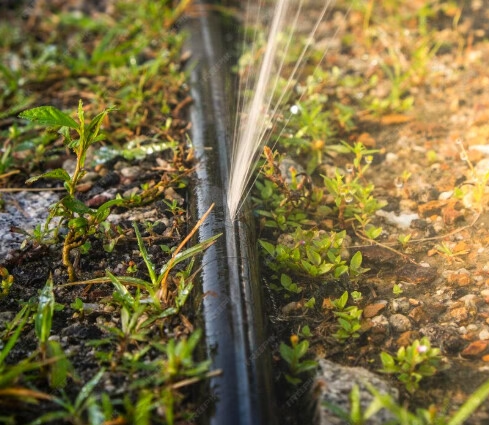
EPA (US Environment Protection Agency) estimates that nearly 17% of residential water use goes to outdoor irrigation, and a significant portion of that is lost through leaks.
It is just one study. In reality, water leaks in irrigation systems can waste thousands of gallons annually while silently draining your budget.
Whether you’re managing a commercial agricultural operation, maintaining a landscaping business, or caring for your residential property, undetected irrigation leaks represent one of the most common yet preventable sources of water waste.
In this post, we’ll look into how to detect water leaks and effective solutions to preventing leaks.
Understanding Irrigation System Leaks: Why They’re More Common Than You Think
In the modern irrigation system, irrigation leaks are common, and detection is most complicated because of the complicated structure of irrigation systems.
For example, it is hard to detect the leaks in underground irrigation systems. Also, modern irrigation systems are complex networks of pipes, sprinkler heads, valves, and connections spread across large areas, creating numerous potential failure points.
Not only do irrigation applications make the detection process harder, irregular watering schedules mask usage patterns that would reveal problems in continuously operating plumbing systems. Seasonal weather variations and occasional heavy rainfall further complicate efforts to identify abnormal consumption through water bill monitoring alone.
The impact extends beyond just water waste. Leaking irrigation systems can create favorable conditions for root diseases, encourage pest populations, and lead to uneven water distribution that compromises plant health and crop yields.
For commercial operations, this directly affects profitability and sustainability metrics.
List of Effective Techniques to Identify an Irrigation Leak
Visual Inspection
The most common and easy way to detect leaks is to observe thoroughly rather than relying on tools.
Begin with a systematic approach, walking your entire irrigation system during operation. Look for obvious signs like water pooling in unexpected areas, unusually green patches or soggy ground unrelated to your irrigation design, and visible water spraying from unusual locations.
Check all above-ground components, sprinkler heads, valves, connection points, and exposed piping, for moisture, mineral deposits (indicating water seepage), or visible cracks.
Pay special attention to areas where pipes enter the ground or change direction, as these stress points are vulnerable to failure. Soil settling can create stress on buried pipes, and roots often exploit weak points in aging irrigation lines.
During the off-season, when irrigation isn’t running, perform a dry inspection to identify visible damage, corrosion, or deterioration.
You can even document findings with photos and GPS coordinates for systematic tracking. This creates a record useful for scheduling professional assessments and detecting patterns.
Pressure Testing
Another way to test leakage is monitoring for any kind of pressure dropping. If there is any sudden drop in pressure detected, it means there is a leakage.
In systems like sprinklers, especially large sprinkler operations, you’ll notice a sudden drop in sprinkler coverage. In other systems too, you’ll experience a drop in coverage area and pressure.
To examine pressure drop systematically, it is best to divide your irrigation system into zones and test each section at normal operating pressure. Using a pressure gauge, you establish baseline readings when everything is functioning normally. Then, systematically isolate sections by closing valves and re-testing pressure. A noticeable pressure drop in a specific zone indicates leakage within that section.
For more comprehensive pressure testing, some operators use a process called “static pressure testing.” Here, the system is pressurized, then shut off, and pressure is monitored over time. Rapid pressure loss indicates leakage; the rate of loss sometimes correlates with leak size.
For large commercial systems, professional technicians often use specialized pressure monitoring equipment that displays real-time data and can alert operators to pressure anomalies.
Water Meter Monitoring
One of the straightforward and sophisticated techniques to find leakage is monitoring water meter readings against water usage.
The best approach requires the use of two consecutive meter readings with irrigation running and the system in use. Divide water used by area irrigated and flow duration to calculate expected consumption rates. When actual usage significantly exceeds calculated expectations, you have evidence of system losses.
Modern smart water meters provide real-time consumption data via digital displays or connected apps, making this process much easier than historical manual reading approaches. Some systems send alerts when flow rates exceed normal parameters.
This is a cost-effective method to detect leakage. However, it cannot identify the exact location where leakage is occurring, making it a diagnostic starting point rather than a complete solution.
Dye Testing
For finding underground leaks, dye testing is the cost-effective and effective solution available.
A few drops of fluorescent dye or food coloring are introduced into the water, and then technicians observe where the colored water appears on the surface, pinpointing the leak location.
Once the leak location is identified on the surface, repairs can proceed with minimal excavation. The method is non-invasive and doesn’t require expensive equipment.
This technique works particularly well for locating the exact surface location of underground pipe breaks. The process requires specific environmental conditions—dry soil helps dye visibility, and the system must be running long enough for dye to reach the leak location.
Smart Sensors and IOT Devices
As technology progresses, you can use the Internet of Things and sensors like moisture sensors, pressure monitors, and flow sensors throughout irrigation systems to generate continuous data about system performance.
When properly configured, these sensors detect anomalies suggesting leaks. A sudden change in soil moisture in areas not scheduled for irrigation, or unexpected pressure fluctuations, triggers alerts.
Smart irrigation controllers integrate sensor data with weather information and plant water requirements to optimize system performance while flagging problems.
This technology provides continuous monitoring that passive detection methods cannot match.
Thermal Imaging
Thermal imaging cameras spot water leakage by measuring temperature changes. Leaking water creates wet areas or cooler zones compared to surrounding dry areas, making leaks visible in thermal images.
The principle is straightforward. During hot days, water leaking from irrigation pipes creates wet areas. Wet soil around the leak is cooler than adjacent areas, and this difference shows clearly in thermal images.
Thermal imaging is less effective for deeply buried pipes or in conditions where soil moisture is already high from recent rainfall.
Also, false positives can occur from irrigation runoff or wet soil from other sources, so combining thermal imaging with other detection methods increases confidence in findings.
Ultrasonic Leak Detection
Ultrasonic detectors sense high-frequency sounds beyond the human hearing range. In irrigation systems, pressurized water escaping through small openings creates noise.
This works for active leaks where water is flowing under pressure. The technology is excellent for finding small leaks that might not produce sounds human ears can detect. Hand-held ultrasonic detectors allow operators to scan systems systematically.
Ultrasonic technology does have its own limitations. It requires proper training to interpret sounds correctly, and effectiveness varies depending on pipe material and surrounding conditions. In noisy environments or with certain pipe configurations, results can be less reliable.
Look for Unusual Plant Growth
While monitoring plant growth and health, if you notice a specific area with lush greenery compared to others, there are high chances of excessive water.
This unusual growth is noticeable in targeted irrigation like drip or other micro irrigation techniques, where only a particular crop receives water, not the entire field.
Even in sprinkler or other irrigation systems where the entire field is irrigated, wilted plants in a specific area, usually a corner of the field, also indicate not receiving enough water, which leads to leakage in the system.
So, it is important to take notice of unusual growth patterns to detect leakage.
Drone Technology
Drones equipped with thermal imaging cameras can detect water leakage across expansive agricultural properties, particularly useful for operations spanning hundreds or thousands of acres.
Drones cover large areas quickly, providing data that would take ground-based crews weeks to collect.
As drone technology is becoming more accessible, it represents a higher investment suitable for large commercial operations.
Final Thought
Finding leaks in an irrigation system is not optional; it is an essential process to ensure environmental responsibility, financial efficiency, and system longevity.
From simple visual inspections to using complex technologies like IoT devices and drones, even some larger irrigation operations hire satellites to find leaks, making solutions accessible regardless of budget or system complexity.
Start with basic inspection and monitoring practices today. If you suspect significant leaks, invest in professional assessment.
Leave a Reply