Manual irrigation is dying; sensors and controllers are taking place to effectively irrigate the landscape.
Whether you’re managing a sprawling agricultural operation, maintaining a golf course, or simply wanting to keep your home lawn green without guilt, smart irrigation systems offer a game-changing solution.
In this comprehensive guide, we’ll explore everything you need to know about smart irrigation technology: how it works, its benefits, and how to choose the right system for your needs.
What Is a Smart Irrigation System?
The smart irrigation system uses devices and sensors to analyze data like soil moisture and the latest weather to optimize water delivery to plants and landscapes.
Unlike the traditional irrigation system, where only the manual system used to turn on and off the irrigation system, smart systems adapt in real-time to environmental changes.
As mentioned earlier, smart irrigation systems consist of several key components.
Smart Controllers
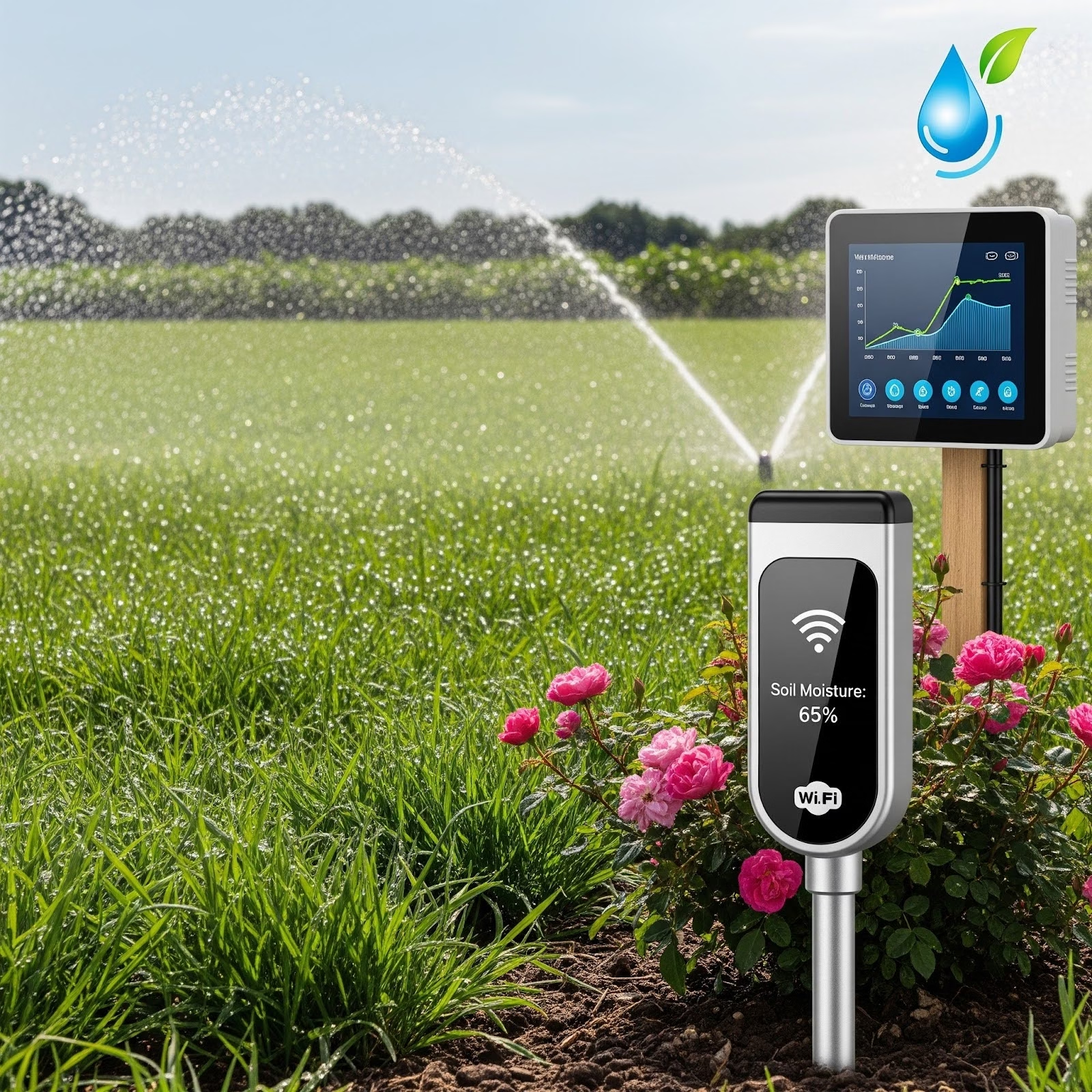
Smart controllers use real-time data inputs to control the irrigation.
They connect to your home WiFi and can be controlled via smartphone apps.
Weather Stations or APIs
Systems integrate with weather data to adjust watering schedules based on rainfall, temperature, humidity, and forecasted conditions.
Soil Moisture Sensor
The device measures the actual water content in the soil, eliminating guesswork about whether plants need watering.
Smart Valves and Flow Meters
The device measures the actual water content in the soil, eliminating guesswork about whether plants need watering.
Mobile Application
These days, all user-friendly apps let homeowners and facility managers monitor and control their systems from anywhere.
The beauty of smart irrigation lies in its simplicity: install the system, configure your landscape zones, and let the technology handle the rest. The system learns your landscape’s needs and adapts automatically.
How Smart Irrigation Systems Work?
Understanding how the smart irrigation system works helps you explain why these systems are so effective at conserving water while maintaining plant health.
Data Collection and Analysis
The primary thing smart irrigation systems do is continually collect data from multiple sources.
Soil moisture sensors measure water levels at the root zone, weather APIs provide real-time atmospheric conditions and forecasts, and some advanced systems even use evapotranspiration (ET) rates—a measure of how much water plants actually use based on their type, climate, and season.
After collecting the data, the next step is analyzing it, which is done by the system’s central processor using sophisticated algorithms. These algorithms compare current soil moisture levels against optimal ranges for your specific plants, factor in recent rainfall, consider upcoming weather predictions, and calculate the precise amount of water needed.
Decision Making Process
When system analyzing completes, it instantly does not turn everything on. Instead, it makes granular decisions about which zones to water, how long to water them, and at what flow rate. This zoning capability is crucial because different areas of your landscape typically have different plant types, sun exposure, and drainage characteristics.
For example, a smart system might water the shaded vegetable garden for 15 minutes but the sunny front lawn for 25 minutes, all within the same watering event. Traditional systems can’t make these distinctions—they either water everything or nothing.
Continuous Adjustment
Here’s where “smart” truly applies. Throughout the day, week, and season, the system continuously monitors conditions and adjusts. If a rainstorm delivers half an inch of water, the system recognizes this and skips or reduces the next scheduled watering.
If a heat wave is forecasted, the system might preemptively increase watering frequency. As seasons change, the system typically reduces watering in fall and winter.
This dynamic adjustment is impossible with conventional controllers, which follow their pre-programmed schedule regardless of actual conditions.
Benefits of Smart Irrigation System
Water Conservation
Compared to traditional irrigation, where no automation is used, smart irrigation systems save 20–50% water.
This means, for big projects like residential properties, it often translates to saving 8,000–15,000 gallons of water per year. On larger properties like golf courses or agricultural land, the savings are measured in millions of gallons annually.
These savings aren’t hypothetical. They’re achieved through eliminating unnecessary watering, preventing overwatering during rainy seasons, and timing irrigation for maximum plant uptake (early morning and evening watering reduces evaporation losses).
Cost Savings
Reducing water consumption leads to the saving of water bills.
Many municipalities charge based on water usage, and reducing consumption by 30–40% means proportional reductions in water charges. In water-restricted areas where usage is metered and overage fees apply, the savings can be dramatic.
Also, healthier plants that receive optimal water require less maintenance, fertilizer, and pest management. Overwatered lawns and gardens are more susceptible to disease, fungal issues, and pest infestations, all expensive to remedy.
Environmental Impact
Water scarcity is a global challenge. In the modern era, the technology has improved to even use groundwater, which takes decades to replenish, and these sources are being depleted faster than nature can restore them.
By reducing irrigation water demand, smart systems help preserve these critical resources.
Furthermore, reduced water usage means less pressure on municipal water treatment facilities and reduced energy consumption for water pumping and treatment.
Extended System Lifespan
Smart irrigation systems run efficiently, which means less strain on equipment.
Pumps don’t run unnecessarily long, valves open and close less frequently, and the entire system experiences less wear.
This translates to longer equipment lifespan and lower maintenance costs over time.
Key Features to Consider When Choosing the Smart Irrigation System
Soil Moisture Monitoring
Always choose a system having a soil moisture sensor, which gives precise measurement of watering needs and gives direct measurement of actual plant-available water.
Weather Intelligence
Look for systems that integrate real-time weather data and can skip watering when rain is forecasted or has recently fallen.
Some systems use local weather stations, while others integrate with online weather APIs.
Ease of Use
Choose the system that fits your technical know-how and is easy to operate.
Premium systems often have steeper learning curves but offer more sophisticated controls.
Scalability
In case of any future plan to extend the current smart irrigation system, choose one that has the option to expand.
Some systems are limited to a certain number of zones.
Integration Capabilities
If you use smart home systems, verify compatibility with Alexa, Google Home, or other platforms you use.
Customer Support and Reliability
Do your own research about smart irrigation system user reviews, focusing on customer service quality.
Irrigation systems need to work reliably—poor support is frustrating when your system malfunctions during summer heat.
Cost
At the end, it all piles down to the cost of the system. Smart irrigation systems range from $150 for basic controllers to $2,000+ for premium multi-zone systems with comprehensive monitoring.
Calculate ROI based on your water usage and local water rates.
Over Coming Common Challenges
Smart irrigation is the future. However, you must understand that it has some challenges.
Initial Setup Complexity
For non-technical people, setting up smart irrigation solutions can be overwhelming.
Some systems help with this through setup wizards, while others require careful manual configuration. Taking time with initial setup pays dividends in system performance.
Learning the System
If you don’t have a technical background, problems continue because of complexity in operating the smart irrigation system.
Users need to understand how to adjust settings, interpret reports, and troubleshoot issues. Quality customer support and documentation help overcome this challenge.
Sensor Reliability
Sensors like soil moisture sensors are vulnerable to physical damage, calibration drift, and environmental factors.
Regular sensor maintenance and occasional recalibration ensure reliable readings.
System Limitation
A smart irrigation system cannot account for every problem that affects irrigation.
For example, unusual weather patterns, recent landscape changes, or pest damage might require manual adjustments.
The best smart systems allow users to override automatic schedules when needed.
Bottom Line…
Whether you’re a homeowner wanting to reduce water bills and environmental impact, a farmer seeking better crop yields, or a municipality pursuing sustainability goals, smart irrigation offers proven solutions.
By automating water management intelligently, these systems deliver water conservation at scale while improving landscape health and reducing costs.
The technology continues advancing rapidly, becoming more sophisticated, affordable, and accessible.
Leave a Reply