
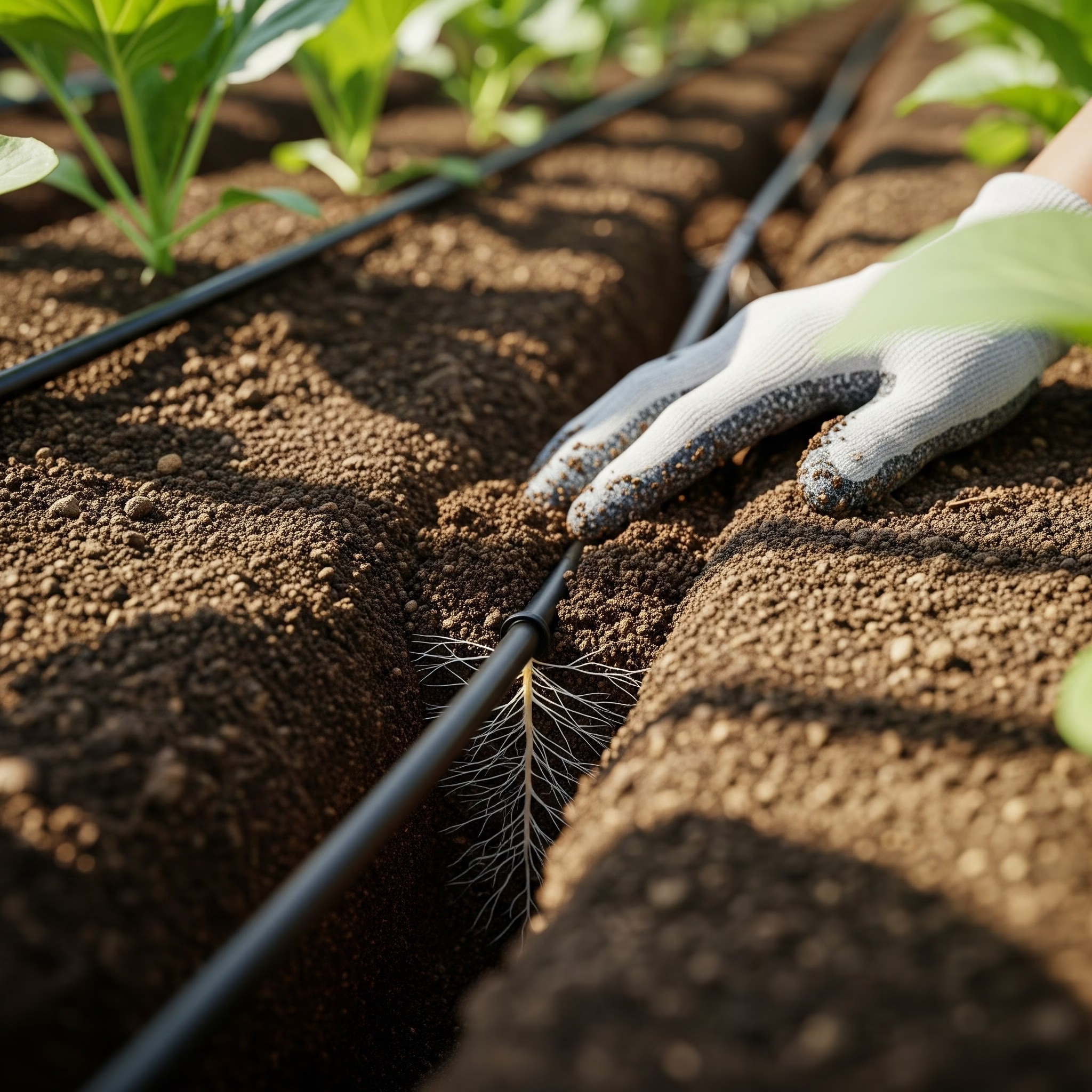
Drip is the popular, most efficient irrigation method. The only concerning thing is its durability.
To make drip lines last long the solution is to not expose the drip lines to open because they’re vulnerable to temperature fluctuations.
The best way to not expose them is bury the line, but there is another concern you must tackle, which is: how deep should I bury them?
Because if you bury lines too shallow, they’ll be vulnerable to damage, temperature fluctuations, and UV degradation. Go too deep, and you’ll waste money, encounter installation challenges, and create maintenance nightmares.
The right depth strikes a balance between protection and practicality,and that depth varies based on your specific situation.
The Ideal Burial Depth for Drip Irrigation
For most residential and commercial drip systems, the ideal burial is 5 to 12 inches (12 to 30 centimeters).
This range provides the optimal balance between protection and performance for typical garden and landscape applications.
However, this is the overall buried depth. The ideal depth for your specific situation depends on several interconnected factors, which we’ll explore throughout this guide.
The Sweet Spot 5 to 10 inches
If you want a more in-depth target for agriculture, many irrigation professionals recommend 5 to 10 inches as the ideal depth for most common applications.
This depth achieves several important objectives simultaneously: it protects the tubing from UV damage and accidental damage from foot traffic or garden tools, it keeps the lines cool enough to prevent degradation, and it’s shallow enough to allow for reasonable maintenance.
It keeps the lines cool enough to prevent degradation, and it’s shallow enough to allow for reasonable maintenance and repairs without extensive digging.
Factor That Influence the Proper Burial Depth
Soil Type and Composition
The most important factor to consider before burying drip lines is your soil type. Different soils have vastly different characteristics that affect both water distribution and line protection.
Sandy Soil
Sandy soil dries quickly and doesn’t retain moisture well, so it requires shallower burial depths,typically 4 to 6 inches.
Drip lines positioned closer to the surface can more effectively deliver water to the root zone before it percolates deeper. Additionally, sandy soil is easier to work with during installation and repair, and it doesn’t compact as severely, reducing pressure on buried lines.
Clay Soil
Contrary to sandy soil, clay soil retains moisture extensively and doesn’t drain as readily, so deeper placement helps water distribute more uniformly through the soil profile.
Clay soil also tends to be more compacted, which can crush shallow lines over time. So it is recommended to place drip lines slightly deeper,about 8 to 12 inches.
Loam
Loam, the ideal garden soil, sits in the middle. This balanced soil type typically does well with the standard 8 to 10-inch depth.
Plant Type and Root Depth
After the soil, the second most important factor you should consider is the plant root depth. Different plants have different root depths, and your drip lines should ideally deliver water where those roots can access it.
Shallow-rooted plants like lettuce, spinach, and herbs typically have root zones between 6 and 12 inches deep. For these plants, 4 to 8 inches of burial works well.
Medium-depth root systems, found in most vegetables and ornamental plants, range from 12 to 18 inches. These plants benefit from the standard 8 to 10-inch burial depth.
For deep-rooted plants about 2 to 3 feet or deeper, you might have to bury lines 10 to 14 inches deep to ensure water reaches the deeper root zone. Some deep-rooted perennials and trees may even benefit from multiple lines at different depths.
Surface Activity and Traffic
Surface activity occurring above your irrigation line has an impact on burial depth. Landscape areas where vehicles and equipment operate, and where people regularly walk, need more protection.
To be exact, you’ll get away with 6 inches if the garden area is undisturbed. For moderately trafficked areas,typical home gardens and landscapes,the standard 8 to 10 inches provides adequate protection.
In high-traffic zones, such as areas near pathways, under parking areas, or in agricultural fields where tractors operate, you should bury lines 12 inches or deeper.
Climate and Temperature Consideration
Temperature of the landscape also impacts both soil condition and plastic tubing degradation.
If there is excessive heat and soil exposed to sunlight, you should bury lines deeply,about 10 to 12 inches or more. Deeper burial protects plastic tubing from UV damage and extreme heat that can cause embrittlement and cracking. In regions where temperature crosses 95°F (35°C), even deeper burial becomes advantageous. Some professionals in even hotter regions recommend 12 to 14 inches deep.
Contrary to hot climates, in freezing zones the drip line faces less sunlight and heat. The ideal burial depth is as low as 6 to 8 inches.
Freezing conditions present another consideration. In areas with freeze-thaw cycles, soil expansion and contraction can damage shallow lines. In these regions, burying lines at least 8 to 10 inches deep helps protect them from this mechanical stress.
Maintenance Accessibility
Consider how often you’ll need to access drip lines for repair and maintenance; excessively deep burial makes maintenance difficult and expensive.
If you anticipate regular or routine maintenance needs, keep lines at the shallower end of your optimal range,typically 6 to 8 inches.
You can bury lines deeper for a more permanent “set and forget it” system where you don’t need frequent access. Commercial agricultural operations often bury permanently installed main lines 12 to 18 inches deep, then use shallower secondary lines for seasonal crops.
Water Tables and Drainage
In areas with high water tables or poor drainage, burying lines too deep means they’ll sit in waterlogged soil, which leads to fungal growth, sediment accumulation, and faster deterioration.
If your water table is shallow, keep lines in the upper portion of the recommended range,6 to 8 inches.
On the flip side, in areas with excellent drainage and low water tables, you have more flexibility to bury deeper without waterlogging concerns.
Irrigation Frequency and Duration
How long and how often you run your system affects appropriate depth.
Systems running frequently for short periods benefit from shallower burial since water moves quickly through shallow soil layers.
Systems running less frequently but for longer periods allow water to penetrate deeper, so slightly deeper line placement may be more effective.
Common Mistake To Avoid
Burying Too Shallow
Burying drip lines 2 to 4 inches deep often damages within the first irrigation season because such shallow depths expose lines to foot traffic, garden tools, soil settling, and UV exposure. Additionally, water doesn’t distribute effectively at such shallow depths, making the system less efficient than intended.
Burying Too Deep
On the contrary, burying drip lines more than 16 inches wastes money on unnecessary trenching, makes maintenance nearly impossible, and may not significantly improve line longevity.
You also risk waterlogging and sediment accumulation issues.
Ignoring Local Conditions
Neglecting local conditions like soil, temperature, and plant type can cause major inefficiencies.
A generic “one size fits all” depth without considering local soil, climate, and plant types leads to suboptimal results. Take time to assess your specific conditions.
Inconsistent Depth
Too much variation in the depth of the buried drip won’t perform consistently. Shallow sections may fail quickly while deep sections prove unnecessarily inaccessible. Aim for uniform depth throughout your system.
Neglecting Expansion Provision
When laying lines, provide adequate slack and avoid anchoring them too rigidly. Soil settling, temperature changes, and plant growth can all cause the ground to shift. Lines need flexibility to accommodate these movements without developing pressure points.
Final Word…
Now you have the understanding of factors affecting how deep drip lines should be buried. Drip irrigation lines require balancing multiple factors: soil type, plant requirements, climate conditions, accessibility needs, and long-term durability goals.
Take time to assess your local conditions carefully. Consider your soil type, the plants you’re irrigating, your climate, and how frequently you’ll need to access the system.
Invest in proper installation practices that ensure consistent depth, adequate protection, and adequate slack for soil movement.
While the general recommendation of 5 to 10 inches, with 8 to 12 inches being optimal for most applications, provides a solid starting point, your specific situation may warrant adjustments.
Leave a Reply