
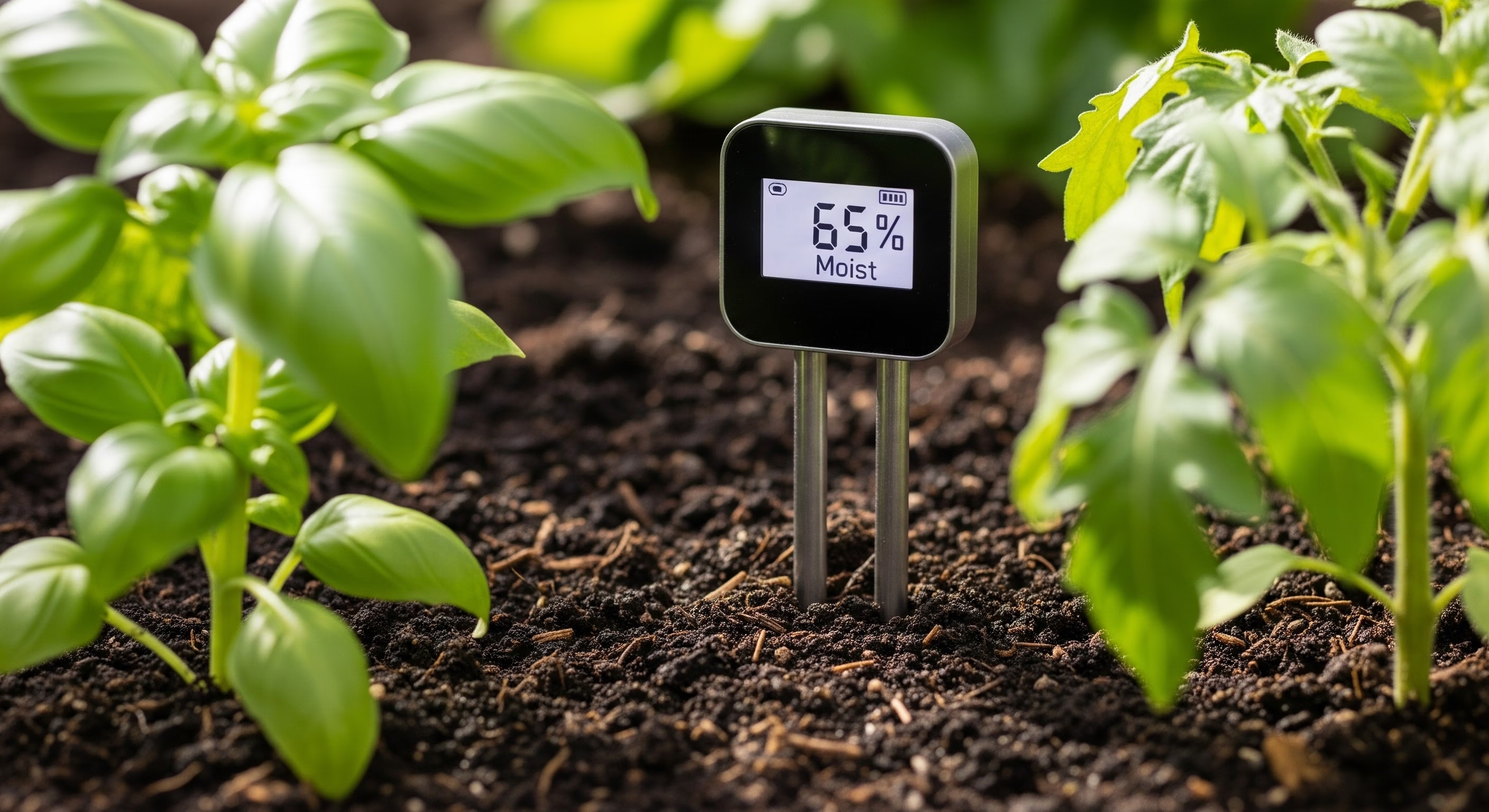
You’re making a big mistake by letting your irrigation system run by itself by scheduling it on weekdays.
But here’s the truth: your plants don’t care about your calendar. They care about the moisture in the soil around their roots right now. Water too much, and you drown roots, invite root rot, and waste hundreds of gallons every season. Water too little, and your vegetables bolt, your flowers droop, and months of hard work wither in the summer heat.
To solve this problem, soil moisture sensors are invented. These small, affordable devices measure the actual water content in your soil in real time and either alert you when to water or automatically trigger your irrigation system to do it for you.
In this guide, we’ll walk you through everything you need to know about soil moisture sensors for gardens: how they work, the best types available, and top product recommendations.
What Is a Soil Moisture Sensor?
As the name says, a soil moisture sensor measures the water content within the soil, measuring the volumetric water content (VWC) of soil by continuously giving you data-driven insight into your garden’s hydration status.
Most moisture sensors measure the water content in % from 0 to 100, where 0% means completely dry soil and 100% means completely saturated.
Different plants require different soil moisture levels, but it is recommended to have at least 20% to 30% moisture for succulents.
How Soil Moisture Sensor Work?
There are two main water-sensing technology used in the Soil Moisture Sensors.
Resistive Sensor
This measures the moisture level by simply checking how much electric conductivity the soil has. If the current passes through the soil effectively, it means it is wet; if not, then it requires water.
To measure the electric conductivity of the soil, two probes are inserted into the soil. Wet soil conducts electricity better than dry soil, so higher conductivity = more moisture.
Resistive sensors are inexpensive and widely available, but they can corrode over time due to electrolysis and may give less accurate readings in highly saline soils.
Capacitive Sensor
This sensor technology works differently. Rather than measuring the current passing through it, it measures the soil density based on capacitive sensing, which includes how easily an electric field passes through it, which changes with water content.
Don’t get confused, both mechanisms look similar, but the capacitive sensor measures the dielectric permittivity of the soil.
Capacitive sensors are more accurate, more durable, and less prone to corrosion. Most mid-range to premium garden sensors use capacitive technology.
Types of Soil Moisture Sensor for Garden
In the changing irrigation field, where new technology emerges every day, soil moisture sensors also get updated, so every soil moisture sensor is not treated equally. Here are some of those.
Basic Anolog Sensors
This is the beginner and budget-friendly sensor, often just two metal probes connected to a dial or LED indicator.
They give you a rough “dry / moist / wet” reading and are best for beginners who want a quick and cheap solution for potted plants or small beds.
Digital Standalone Sensor
These are the higher versions of the basic sensor. These display a numerical moisture reading on a built-in screen.
No connectivity is required; you simply push the probe into the soil and read the value. Some also include light and pH meters, making them versatile multi-tools.
WiFi & Bluetooth Smart Sensors
As the name says, these sensors connect through WiFi or smartphone via Bluetooth, sending real-time data to an app.
You can track moisture trends over time, set alerts, and sometimes integrate with weather data for smarter watering decisions.
Integrated Smart Irrigation System
The most advanced option: sensors that connect directly to smart irrigation controllers (like Rachio or RainBird) and automatically manage your watering schedule.
These systems are ideal for larger gardens, lawns, or anyone who wants true automation.
List of Top Soil Moisture Sensors
ECOWITT WH 51L
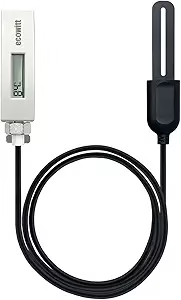
ECOWITT is perfect for home garden use. Having the small display and connectivity to WiFi makes it easier to track and get real-time moisture data.
The sensor operates on 915MHz wirelessly, along with the 1m/3.28ft PVC sensor wire, and could measure soil moisture up to 80cm.
When the WH51L sensor is inside soil with different humidity levels, it will generate electrical signals of different intensities. The sensor will convert the electrical signals into AD values. The higher the humidity, the greater the AD value.
Make sure the WH51L’s body is placed at least 20cm higher than the surface of the soil. If the device’s body is very close to the surface, RF would decline, which might affect the transmission of the data.
YAMRON 4-in-1 Soil Moisture Meter
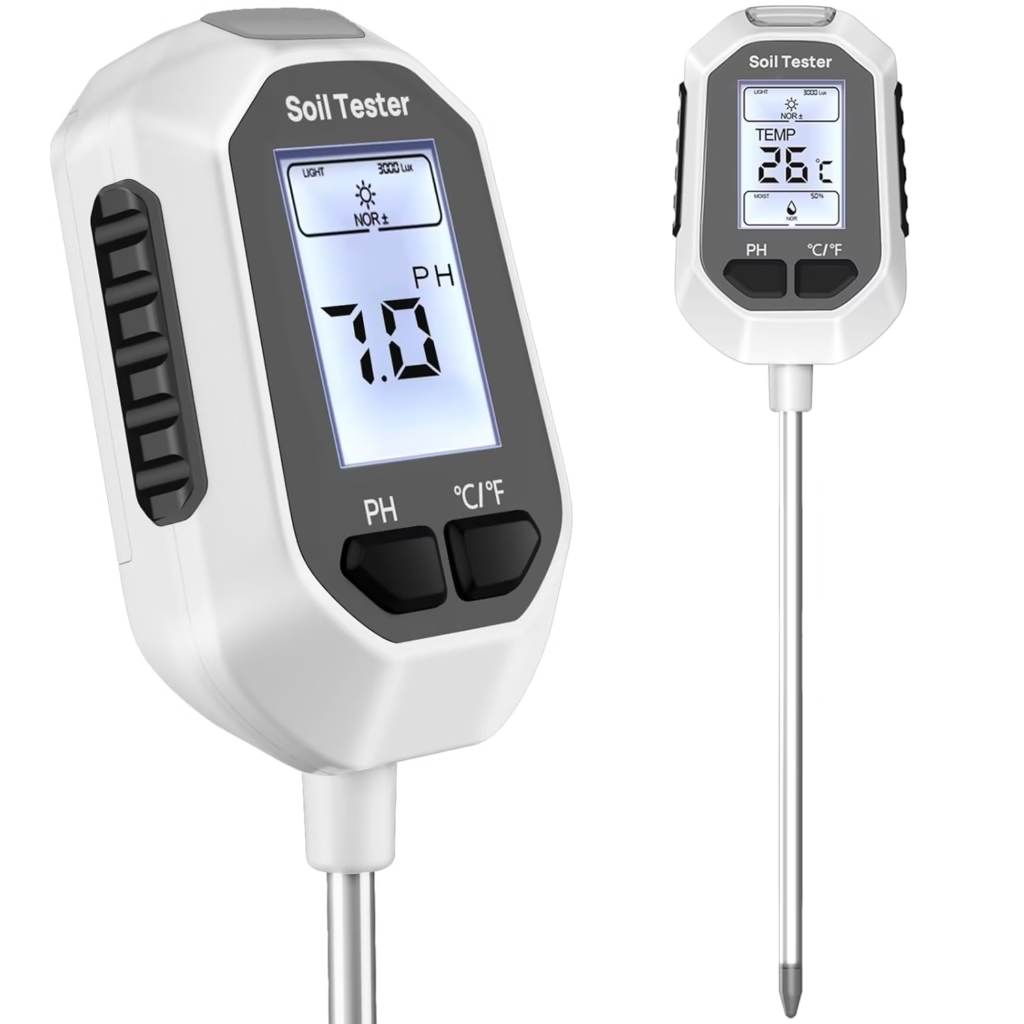
This sensor not only measures the water content in the soil but also measures pH, temperature, and sunlight to help you take better care of flowers and plants.
The soil moisture meter is powered by 4 AAA batteries and has a large LCD screen and white backlight to conveniently display and read digital parameters in day or dark conditions.
YAMRON uses the latest probe technology that can quickly and accurately measure the pH, moisture, and temperature in the soil. With the light intensity analysis on the instrument, it can allow you to know when to water, control the pH and temperature acidity, and determine whether the plants have enough light to cultivate the plants more scientifically.
Professional Grade Digital Soil Moisture Meter
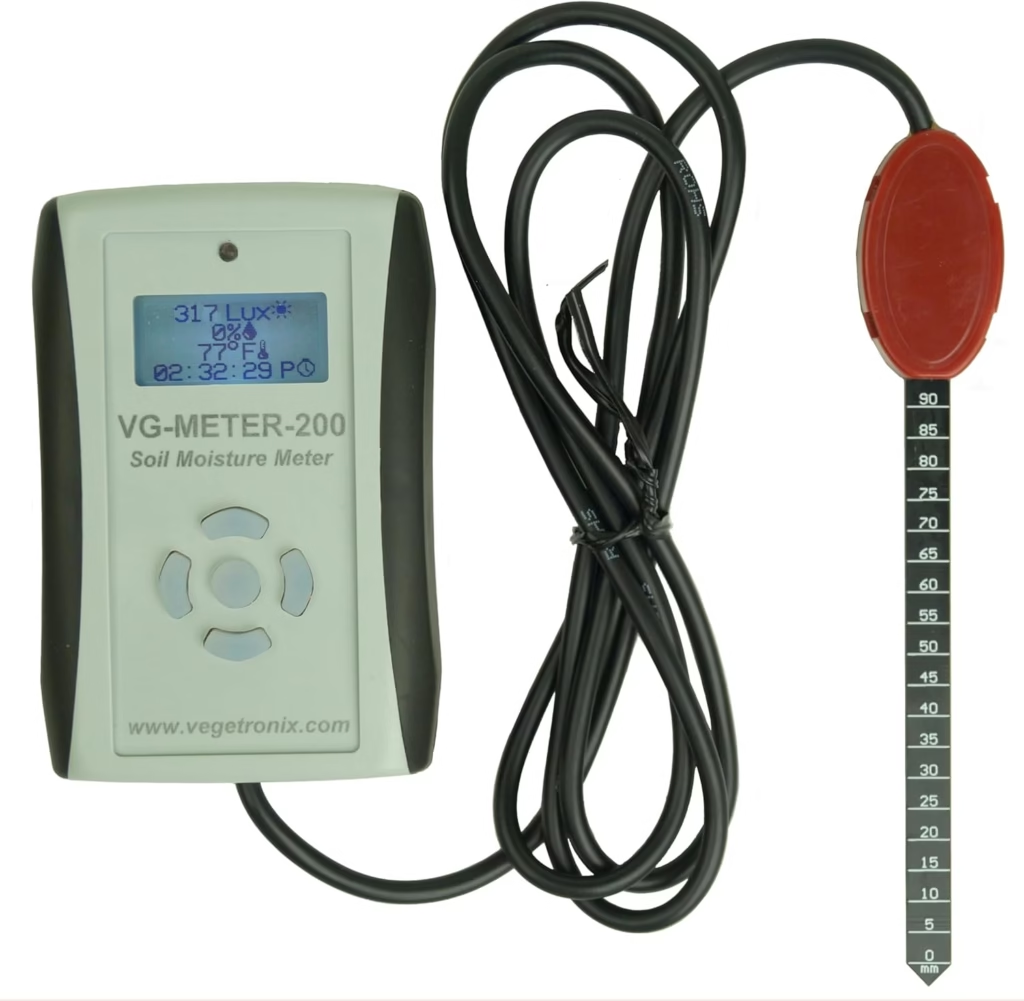
This moisture meter is designed to withstand salt and high pH levels.
The probe used in the moisture meter is dielectric and uses a single slender probe, unlike cheap moisture meters, which are wildly affected by salts and soil pH.
The display shows moisture, temperature, and light levels on a common display, or separately in large text format for easy reading.
The meter runs on 2 AA batteries and is optimized for battery life.
Other cheap galvanometric meters run electricity through the soil to infer soil moisture, potentially sending electricity through the roots of your sensitive plants.
Extech MO750 Soil Moisture Meter
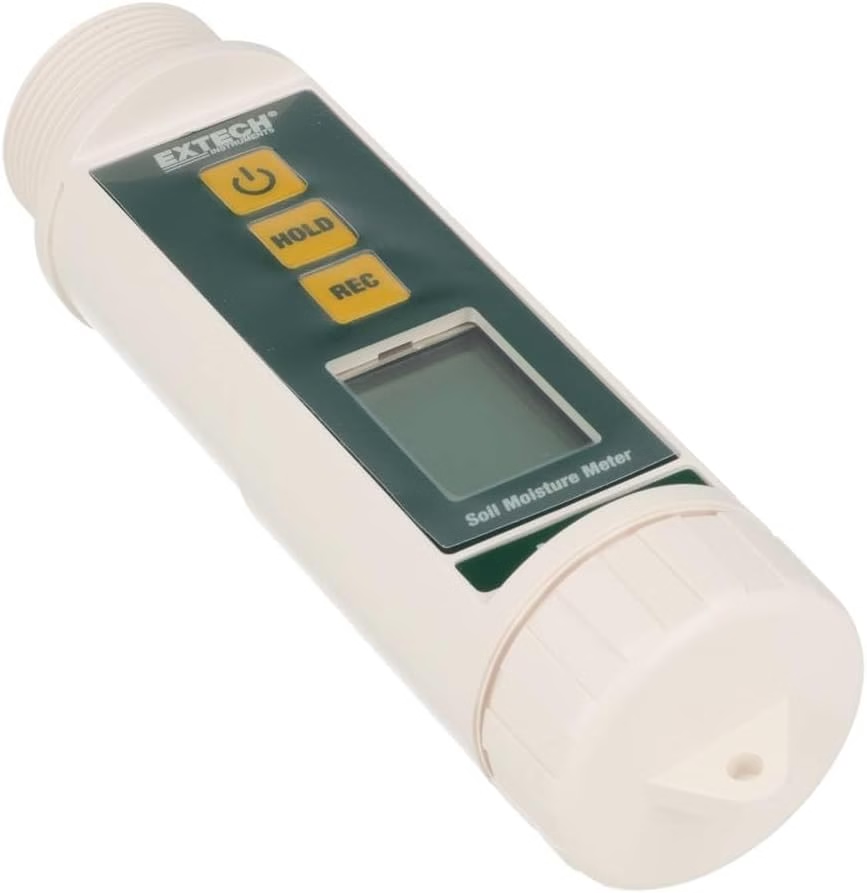
This is an expensive soil moisture sensor on the market, costing you more than $300.
The moisture meter has a large LCD screen that gives you quick, easy-to-read results in seconds, so you can spend more time growing and less time troubleshooting.
Beyond the garden, it is perfect for agriculture, forestry, environmental studies, and soil research. If soil health matters, the MO750 delivers accurate data you can trust.
The tool is engineered to withstand field conditions. The lightweight handheld body and tough probe make it easy to carry anywhere. Runs on standard AAA batteries, so you’re always ready to measure.
LANBOJINDI Soil Moisture Sensor
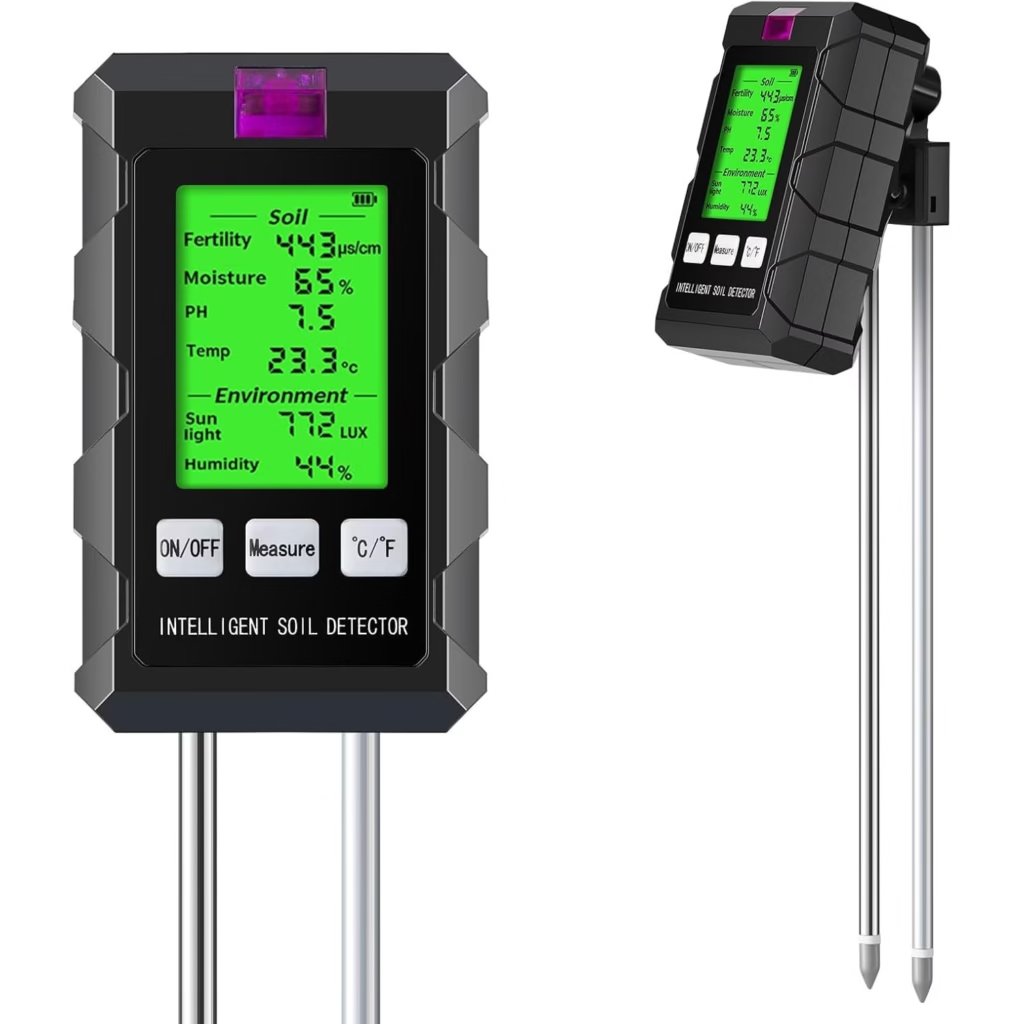
This moisture sensor gives you accurate measurement not only of moisture in the soil but also pH level, temperature, sunlight intensity, soil fertility, and air humidity.
To give accurate measurement features at one time, factory-calibrated software with high precision and reference values are permanently locked. By doing so, they completely eliminated the “auto-calibration upon startup” technology, fundamentally eliminating random reading fluctuations and status changes caused by environmental factors or battery conditions.
The sensor has a backlit LCD screen that supports 90° rotation, making it effortless to check readings from different angles, whether indoors, outdoors, or in low-light greenhouses.
Like most sensors, LANBOJINDI also has a 180mm dual-needle probe for deeper soil penetration and more precise readings.
Sonkir Soil Moisture Sensor
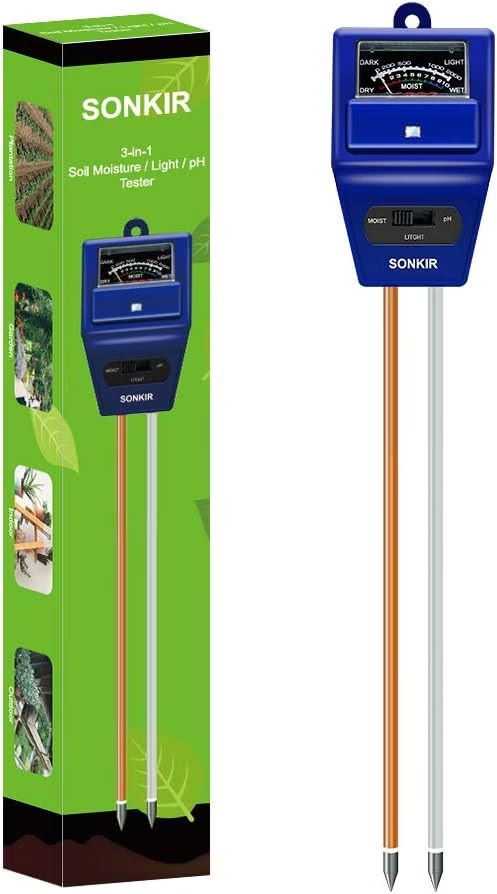
Sonkir is a simple-to-use and budget-friendly soil tester.
Like most soil testers that use batteries for power, Sonkir uses the galvanic cell principle, where the copper and aluminum probes act as electrodes, and the moisture in the soil acts as the electrolyte.
Because of the lower power usage, the sensor only offers an analog meter for soil moisture, sunlight, and pH level measurements.
It is so simple to use. You just need to insert the sensor probe into the soil about 2–4 inches and toggle the switch to test moisture, pH, or sunlight you would like to measure.
Comman Mistakes To Avoid with Soil Moisture Sensor
Even if you installed the world’s best precise soil moisture sensor, if you use it incorrectly, it won’t help you. Here are the most common mistakes and how to avoid them:
Placing the Sensor Too Shallow
Soil moisture is important to the roots of the plant. If you installed the sensor too shallow, where water evaporates quickly, then the depth doesn’t reflect what roots are experiencing.
Using the Once Sensor to Multiple Microclimate
In uneven water distribution, using one moisture sensor is not helpful because it cannot measure the area where irrigation is not done. In raised bed irrigation, a raised bed in full sun will dry out much faster than a shaded border bed.
Use separate sensors for zones with different sun exposure, plant types, or soil mixes.
Ignoring Calibration
Some sensors are pre-calibrated for average soil, but your soil may vary. If readings seem off, check against a soil test or manual feel test.
Forgetting Battery Maintenance
Most soil moisture sensors use batteries. If you do not check the battery frequently, you can lose the sensor readings, so set a reminder to check the battery level at the start and end of each growing season.
Over-relying on automation without monitoring.
Smart irrigation is powerful, but it’s not infallible. Check your app dashboard weekly to ensure sensors are reading correctly and automations are firing as expected.
Final Thoughts…
Soil moisture sensors are beneficial for irrigation systems, automation, and precise irrigation without wasting water.
Your small investment in a soil moisture sensor stops you from guessing and starts you responding to what your plants actually need.
Always choose the sensor that fulfills your requirements and remember to avoid the mistakes.
Your garden works hard all season. Give it the data it deserves and watch it thrive.
Leave a Reply