
Still confused to pick the right time to water the lawn to look fresh and attractive? And getting confused by seeing the neighbor watering the lawn all day long? And even more confused by advice from a friend or stranger who never cared about the lawn?
Don’t worry, in this post I’ll put the answer by explaining the logic and the science behind it.
You’ll also get the answer of what happens if you water at different times, with the benefits and the drawbacks.
But before moving to what is the best time to water the lawn, you must know why timing matters.
Why Watering Time Matters More Than You Think
Most homeowners focus on the frequency of irrigation and how much water to use, but timing is arguably the single most critical factor in lawn care. Water your lawn at the wrong time of day, and you’re setting yourself up for:
Evaporation
During the hot summer, you lose up to 30–50% of your water before it ever reaches the roots.
Fungal Disease
Fungai that spreads silently and ruins entire patches overnight.
Shallow Root System
Shallow roots make grass brittle and vulnerable to drought.
Scorched blades
This is caused by water droplets acting as tiny magnifying glasses in direct sun.
These are some noticeable problems you must face if you do not water the lawn at the right time.
The good news? Once you understand the science behind watering timing, the right answer becomes obvious and easy to stick to.
The Best Time to Water the Lawn
The short answer is between 6 AM and 10 AM is the best time to water the lawn.
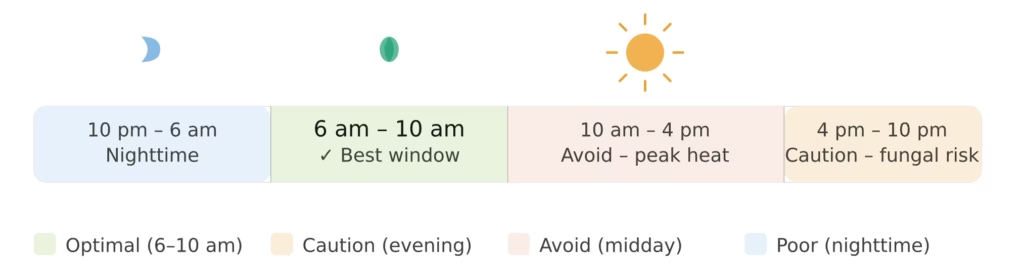
If morning watering is not your cup of tea, then you can consider giving it in the evening, even though there is the risk of fungal spread.
Otherwise, morning is the best time to water the lawn. The timing is backed by turf science, water conservation research, and decades of practical lawn care experience.
Here’s exactly why the early morning window is so powerful:
Low Evaporation Rate
When irrigating in the morning, you reduce evaporation because the environment is cool, calm, and often still, and the sun sits on the horizon. This means the water you put down actually stays in your soil long enough to soak in deeply, rather than evaporating off the surface.
By contrast, watering at noon or during peak afternoon heat can see 30–50% of your water evaporate before it ever reaches the root zone. That’s money literally vanishing into thin air.
Water Reaches the Root Zone
In the morning, where evaporation is low, the water can easily penetrate the top layer of the soil and reach the root zone through the thatch, exactly where it needs to be.
Encourages roots to grow downward, creating a more drought-resistant, resilient lawn over time.
You Work With the Nature Not Against It
Grass naturally uses water in the morning when photosynthesis kicks in.
Watering before or during this period ensures your grass has the moisture it needs ready and waiting when it starts its daily metabolic work.
Grass Blades Dry Quickly
This is the most underrated benefit of irrigating early in the morning. The rising sun and increasing temperatures naturally dry the grass blades throughout the day.
Dry blades are resistant blades; they don’t harbor the moisture that fungal spores need to germinate and spread.
Lawn diseases like brown patch, dollar spot, and powdery mildew are almost always triggered by prolonged moisture on the leaf surface, especially overnight. Morning watering eliminates this risk entirely.
What Happens If You Water at The Wrong Time?
Understanding what really happens if you water at the wrong time helps you know why the morning window matters so much.
Midday Watering (10AM to 4PM):
This is the worst option to irrigate the lawn because of the peak heat, bringing more damage like:
Evaporation Skyrocket
As you already know, the combination of intense sun, peak temperatures, and afternoon wind means a huge proportion of your water simply never makes it to the soil.
Heat Stress
At midday, the lawn is already under the stress of peak heat. Watering doesn’t immediately cool it, and the shock of cold water on hot blades can actually compound stress rather than relieve it.
Potential Leaf Scorch
There is a concept that states that water droplets act as magnifying glasses and burn the grass leaf. Scientists say that it is debatable whether water drops act as magnifying glass, but it can’t be ignored.
However, the combination of heat stress and wet grass blades under direct, intense sunlight can still cause stress to already struggling grass.
Evening Watering (4 PM – 10 PM):
Evening watering is better than midday water waste because there is no sun exposure to evaporate the water.
However, the problem is straightforward: when you water in the evening, the grass blades stay wet all night. There’s no sun to dry them, temperatures drop, and humidity often rises. This creates the exact conditions that fungal diseases thrive in.
Common diseases during evening watering include:
Brown patch (Rhizoctonia solani)
Causes brown, circular patches that spread rapidly
Dollar spot (Clarireedia jacksonii)
Creates small, tan-colored dead spots across the lawn
Pythium blight
A particularly destructive disease that can destroy large sections of lawn overnight
Powdery mildew
A white, dusty coating that weakens grass plants over time
Nighttime Watering (10 PM – 6 AM):
This is the worst time to water the grass, combining the inefficiency of not having sun to guide water movement into the soil with the prolonged wet-foliage problem of evening watering.
If you’re using an automatic irrigation system, double-check your timer isn’t set for a late-night cycle.
Factors to Consider Before Watering the Lawn
Now you know the best time to water the lawn, it is better to understand some of the factors that can help you establish a regular watering routine that effectively grows your grass and keeps it green and healthy.
Grass Type
Not all grass is the same; some grown in winter require different types of watering than summer ones.
Cool-season grasses (fescue, bluegrass, ryegrass) are most active in spring and fall. They’re more drought-tolerant in cooler temperatures but struggle in summer heat.
Warm-season grasses (Bermuda, Zoysia, St. Augustine, centipede) thrive in summer heat and are most water-hungry during their peak growing season.
Soil Type
Soil type impacts the frequency and how deep watering is required because the soil influences factors like water retention and drainage rates.
That’s why it is important to do a proper soil test and check the pH level to understand the soil type and the need for nutrition according to water needs.
Climate
Climate is another factor you must adjust watering for. For example, if in your area grass gets heavy rain, then it may not require as much watering. However, if you live in a drier climate, the grass will likely need to be watered more often.
Keep in mind, if you water at any time of the day in hot summer, especially when the sun is intense, it can lead to wasteful evaporation.
Similarly, the wind can affect how well your grass absorbs water and tends to be calmer in the mornings.
How Long Should You Water Your Lawn?
How much water you must give to the lawn is as important as timing because if you run the sprinkler system for 5 minutes a day during the morning or give water that creates puddles, both won’t help.
The goal is to give 1 to 1.5 inches of water per week. To measure this, place a few empty tuna cans or shallow containers around your lawn while your sprinklers run. Check how long it takes to fill them to one inch. That’s your baseline run time.
For most residential sprinkler systems, this typically takes 20 to 30 minutes per zone, though this varies significantly based on:
- Sprinkler head type and spacing
- Water pressure
- Soil type (clay soils absorb water more slowly than sandy soils)
- Local climate and season
The Second-Best Time to Water (If You Have No Choice)
Life is not perfect for everyone. If you don’t have any option to water during the morning, then the best time is to water late afternoon between 4 PM and 6 PM.
At this time, temperatures are starting to drop, the intensity of the sun is decreasing, and—crucially, there are still a few hours of daylight remaining to help dry the grass blades before dark.
This window won’t give you the same benefits as early morning, and you’ll need to monitor your lawn more closely for signs of fungal disease. But it’s a workable compromise for homeowners who can’t manage a pre-dawn sprinkler schedule.
Adjusting Your Watering Schedule by Season
The best time of day remains consistent year-round (early morning), but how often and how much you water should shift with the seasons.
Spring
Your lawn is waking up from dormancy, and soil moisture from winter is often still adequate. Start with once-a-week watering and adjust based on rainfall.
Summer
This is peak demand season. Your lawn may need watering 2–3 times per week, or even daily during extreme heat waves.
Fall
Temperatures cool, rainfall often increases, and your lawn’s water needs drop significantly. Scale back to once a week and let the grass harden off for winter.
Winter
In most climates, lawns go dormant and need little to no supplemental watering. In warmer climates where grass stays green year-round, once every 2–3 weeks may be sufficient depending on rainfall.
Final Thoughts….
Maintaining green grass in the scorching hot summer is not luck; rather, it is planning, which includes timing, consistency, and working with the natural rhythms of your grass rather than against them. The science is clear, the results are consistent, and the fix is surprisingly simple: water early in the morning, water deeply, and let the sun do the rest.
Whether you’re dealing with a patchy backyard struggling through summer, a newly seeded lawn you’re trying to establish, or simply trying to cut your water bill without sacrificing curb appeal, shifting your watering schedule to the early morning window is the highest-leverage change you can make right now.
Leave a Reply