
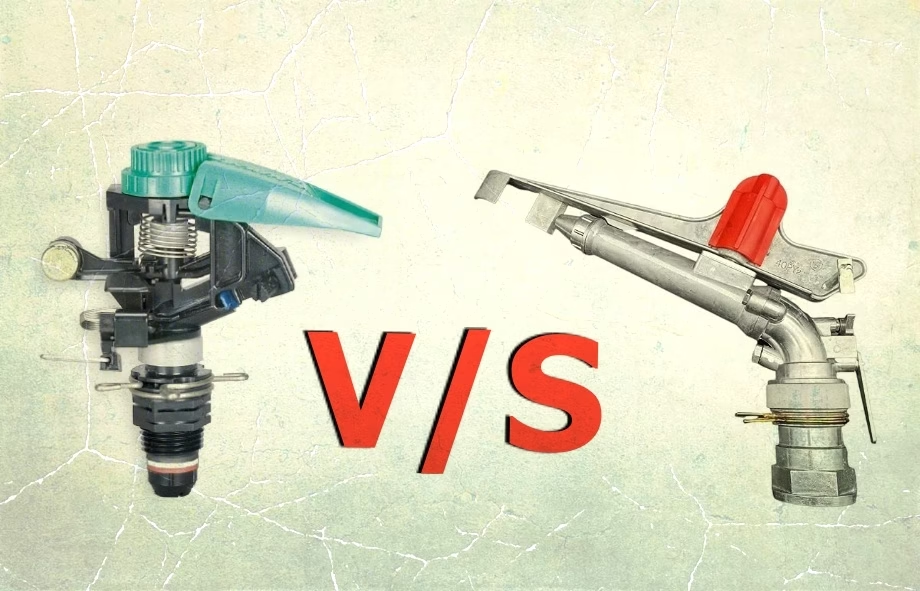
Rain Gun and Sprinklers both have many similarities, that’s why it will confuse you when choosing a particular one.
Even though it is clearer when you have the crop and area of growing fixed, the decision can be easily made by looking at both system features and use cases.
However, it gets complicated when growing a variety of crops in different levels of terrain.
So, before jumping into the detailed comparison, here is the quick answer.
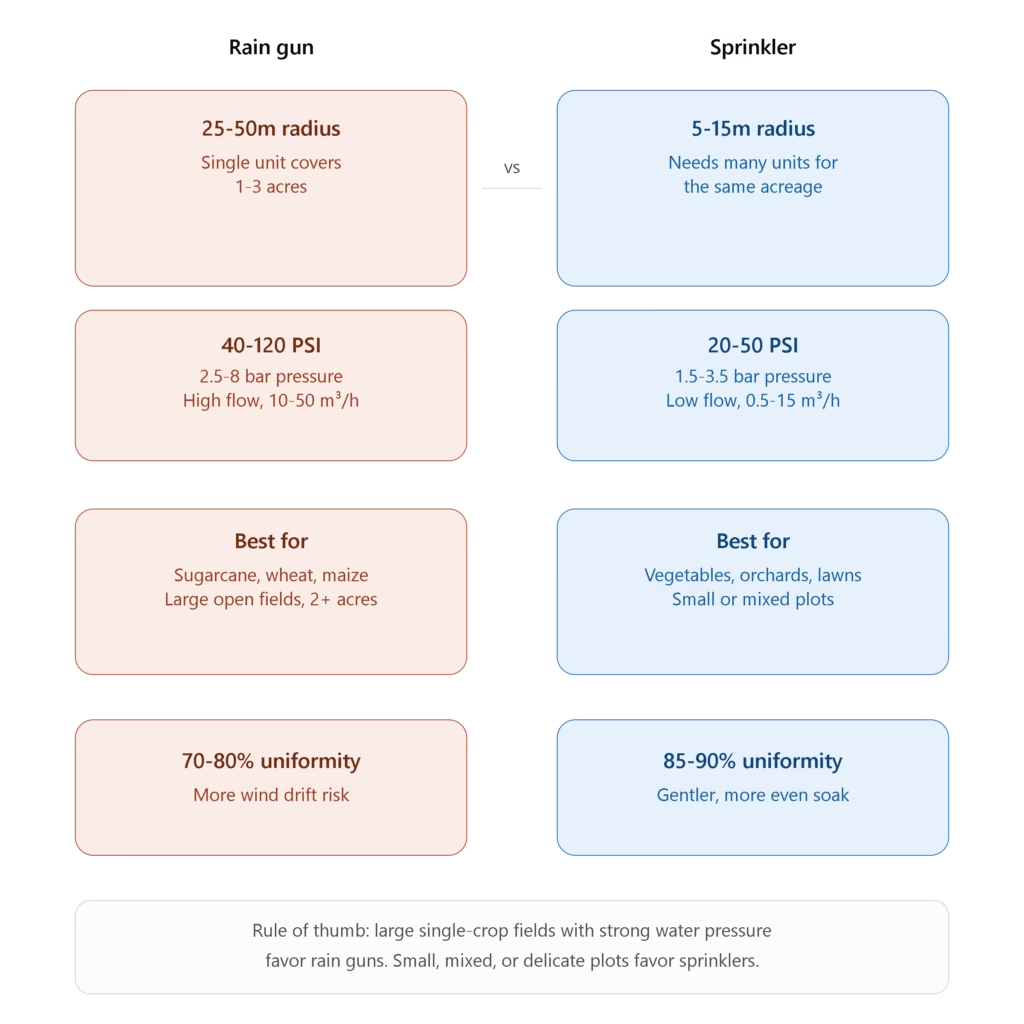
If you’re irrigating more than 2–3 acres of a single open-field crop (sugarcane, wheat, maize, fodder) and you have strong water pressure (40+ PSI / 2.5+ bar) with high flow available, a rain gun is almost always the better choice, fewer units, less pipe, lower labor.
If you’re irrigating smaller plots, mixed crops, vegetables, lawns, or orchards under trees, or your water pressure is limited, a sprinkler system (or several smaller sprinkler zones) will give you better water distribution and less crop stress.
On the surface, now you get the idea of how they’re different from each other.
Now look at it in detail.
Farm Size and Field Shape
As I mentioned earlier, more than 3 to 4 acres, it is best to choose the Rain Gun rather than the sprinkler.
It is true, but it also depends.
If you have a flat field and the crops are not tall, and the availability of water is limited to only certain periods and you cannot install big pumps, then the obvious choice is to choose the sprinkler system.
The sprinkler system is suitable for flat surfaces and crops needing frequent watering.
On the other hand, the Rain Gun is used for different terrains, especially hilly terrains where it is difficult to install the sprinkler system and where high pressure is required to irrigate.
Also, if you’re irrigating more than 4 acres and have access to high-pressure water, then you can use a Rain Gun. A single rain gun is normally applied to irrigate pastures, tall bushes, orchards, and maize plantations of large acreage, specifically because of the water usage and throw radius advantage at scale.
Water Source and Pressure
If your water source and pressure are not up to the mark, then there is no replacement for the choice.
Here is the table explaining it.
| Difference | Rain Gun | Sprinkler |
|---|---|---|
| Operating Pressure | Needing 40 to as high as 120 PSI | At least 20 to 50 PSI |
| Flow Rate | Flow rate required typically 10-50 m³/h | 0.5-15 m³/h |
| Pipe Pressure Rating | 8 bar and above recommended | Standard agricultural-grade pipe |
| Pump Requirement | Dedicated high-pressure pump, often required | Works with standard farm pumps or even municipal pressure in some cases |
If you’re on a borewell with a modest submersible pump, or municipal/canal water with inconsistent pressure, a rain gun may simply be impractical without a separate booster pump investment, which changes your budget math entirely.
Crop Type
Compared to sprinklers, rain guns release more water and the water droplets are bigger than those of sprinklers.
Some crops tolerate, and even benefit from, the heavier droplet impact and intermittent soaking a rain gun delivers. Others get damaged by it.
Rain gun-tolerant crops:
Sugarcane, wheat, maize/corn, barley, canola, fodder grasses, pasture, and tall row crops with sturdy stalks.
Rain gun-risky crops:
Delicate vegetables, seedlings, nursery stock, flowers, and anything prone to leaf-surface fungal issues (excess standing water on leaves encourages mildew, rust, and rot in humidity-sensitive crops).
Sprinkler-friendly crops:
Vegetables, lawns/turf, orchards (especially under-canopy micro-sprinklers), vineyards, and nursery beds where gentle, even coverage matters more than throw distance.
Budget
Rain Gun costs you more upfront per unit (heavier construction, pressure-rated pipe, bigger pump), but you need fewer units to cover the same ground.
Sprinklers cost you less per unit, but you need many more of them, plus more pipe and more valves to manage.
Coverage
When it comes to covering the field, the sprinkler system maintains water coverage uniformity (roughly 80% to 90%).
Rain Guns typically cover 70% to 80% of the ground, but well-maintained rain guns with pressure regulators can close that gap.
Higher uniformity matters more on high-value crops where uneven watering directly affects yield.
When To Use Both (Hybrid Setup)?
Many farms don’t pick one irrigation system for the entire property. They create zones by crops or terrain and use different systems accordingly.
If you are growing sugarcane or wheat in the main field, you’ll need a rain gun on a tripod, moved between set positions.
In the same field, for vegetable plots or nursery beds, a dedicated sprinkler zone at lower pressure is suitable. Similarly, for young orchard rows, micro-sprinklers are suitable.
Apart from crops or terrain, if there is an emergency or drought situation, a portable rain gun is kept on hand even if sprinklers are the primary system, since rain guns can provide quick relief during system failures or dry spells.
If you’re designing from scratch, it’s often cheaper to size your pump and mainline for the rain gun’s higher pressure requirement, then step pressure down for sprinkler zones using a pressure-reducing valve, rather than trying to step pressure up later.
Maintenance and Long Term Consideration
Without knowing the maintenance and long-term perspective of which is the best irrigation system for you, it is a bit early to choose one.
Rain Gun
Rain guns have fewer moving parts and components, making them generally easier to maintain, and the robust construction needed for high pressure adds to durability.
But the components that do exist (bearings, high-pressure seals) take more punishment and may need more frequent attention than a standard sprinkler.
Sprinklers
Sprinkler systems with multiple components, valves, and automated controls require more regular maintenance overall.
But individual parts are cheaper and easier to replace when something fails. No single point of failure takes out your whole field.
Final Word…
These are all the differences between the Sprinkler and Rain Gun. It is a helpful guide to evaluate every factor to make a better decision so you don’t have to regret it later.
Even though these are all the differences, there are some factors you must have clarity on to make an even better choice.
Always know that you can use a Rain Gun for less than an acre, but it is usually inefficient because Rain Guns are designed for multi-acre throws.
You can switch from sprinkler to rain gun without redoing the whole irrigation system, but make sure your mainline and pump were already sized for higher pressure.
Leave a Reply